AHEAD of ceasefire talks that reportedly failed to reach an agreement in Pakistan, U.S. President Donald Trump issued a stark warning toward Iran.
He threatened to destroy Iran’s civilization and push the country “back to the Stone Age” — isolated, primitive, and impoverished.
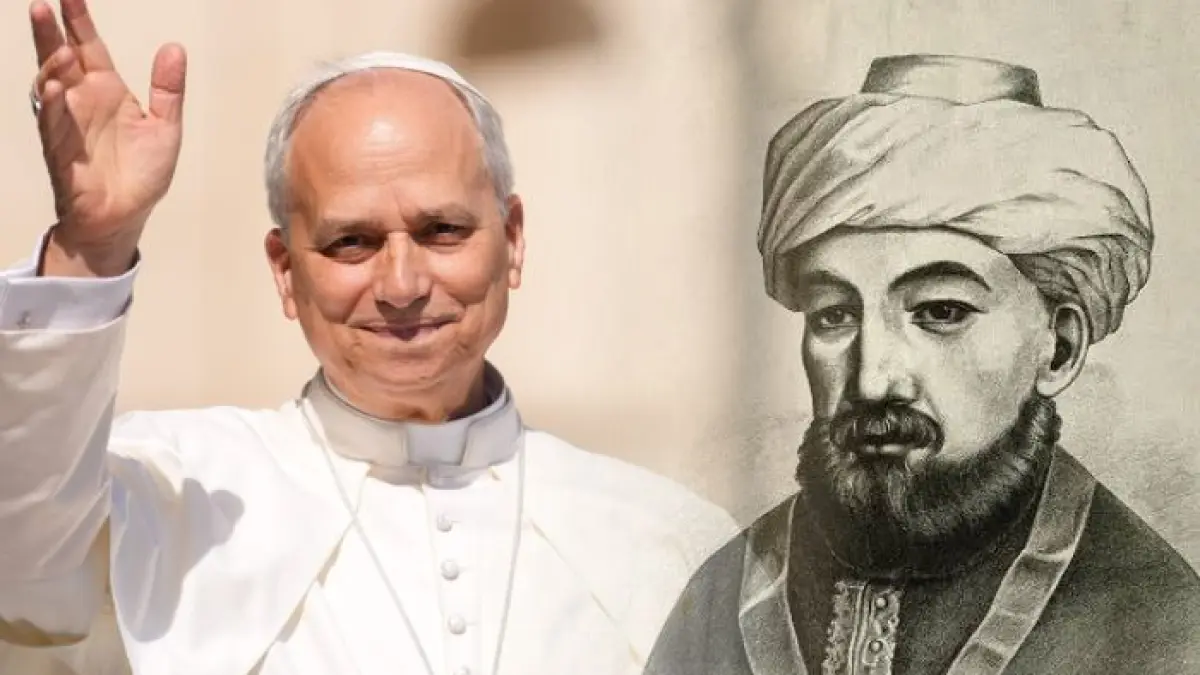
Speaking in the name of civilization, humanity, and global peace, Pope Leo XIV — described here as the leader of the Catholic world — strongly condemned Trump’s remarks.
According to the Pope, such threats were reckless and inhumane, contradicting the fundamental values of compassion and respect shared across religions.
In today’s era — especially among Generation Z — many young people increasingly seek what could be described as a “religion of humanity.” In other words, humanism.
Younger generations generally aspire to a peaceful and fulfilling life, far removed from the horrors of war. Any religion perceived as lacking humanistic values risks being abandoned by them.
This concern may also apply to Islam. If Muslims fail to embody the principles of akhlaqul karimah (noble character) and rahmatan lil alamin — the Islamic teaching of mercy for all creation taught by the Prophet Muhammad — the faith could gradually lose its moral appeal.
It may be avoided or rejected by people seeking compassion and justice.
Perhaps this perspective may seem excessive. But it serves as a reminder to remain alert to the growing influence of what some might call “humanist religion.”
Signs of this shift can already be seen. In the current tensions involving Iran, waves of people across the world — many of them Christians or non-Muslims — have voiced support for Iran, a Muslim-majority nation.
They have condemned Trump’s rhetoric and protested the possibility of escalation. Even within the United States, millions have demonstrated against the policy.
In Israel itself, some Jewish communities have also expressed opposition to military action against Iran.
Reflecting on these dynamics brings to mind a historical figure: Mukhairiq Tsa‘labah, a Jewish rabbi who lived during the time of the Prophet Muhammad.
Toward the end of his life, Mukhairiq joined the Muslim forces of Medina in the Battle of Uhud, fighting against the Quraysh of Mecca, who sought to destroy the emerging Muslim community in Medina.
Mukhairiq was ultimately killed in that battle. Before departing for war, however, he left a will for his family, entrusting all of his wealth to the Prophet Muhammad.
The assets were later managed to support orphans and widows who had lost family members in the Battle of Uhud.
Historically, some scholars note that the early foundations of the Baitul Mal, or public treasury in Islamic governance, were linked to this inheritance.
Why would a Jewish rabbi fight alongside Muslims?
According to historical narrations, Mukhairiq once explained his decision clearly. Having lived for years in Medina as part of a Jewish minority, he experienced peace and prosperity under the leadership of Muhammad.
He feared that the city’s harmonious and tolerant civilization would collapse if it fell to forces determined to destroy it.
A society built on tolerance, mutual respect, solidarity, and peace is something people everywhere desire — regardless of their religion.
Ultimately, the story of Mukhairiq serves as a reminder: human values — compassion, justice, and solidarity — remain at the heart of any civilization that hopes to endure.
Writen by Soenarwoto. He is a senior journalist based in Tulungagung, Indonesia. Translated by openAi(*)
Editor : Anggi Septian A.P.